
Why Your Cat Is Excessively Licking: Causes, Concerns, and When to Act
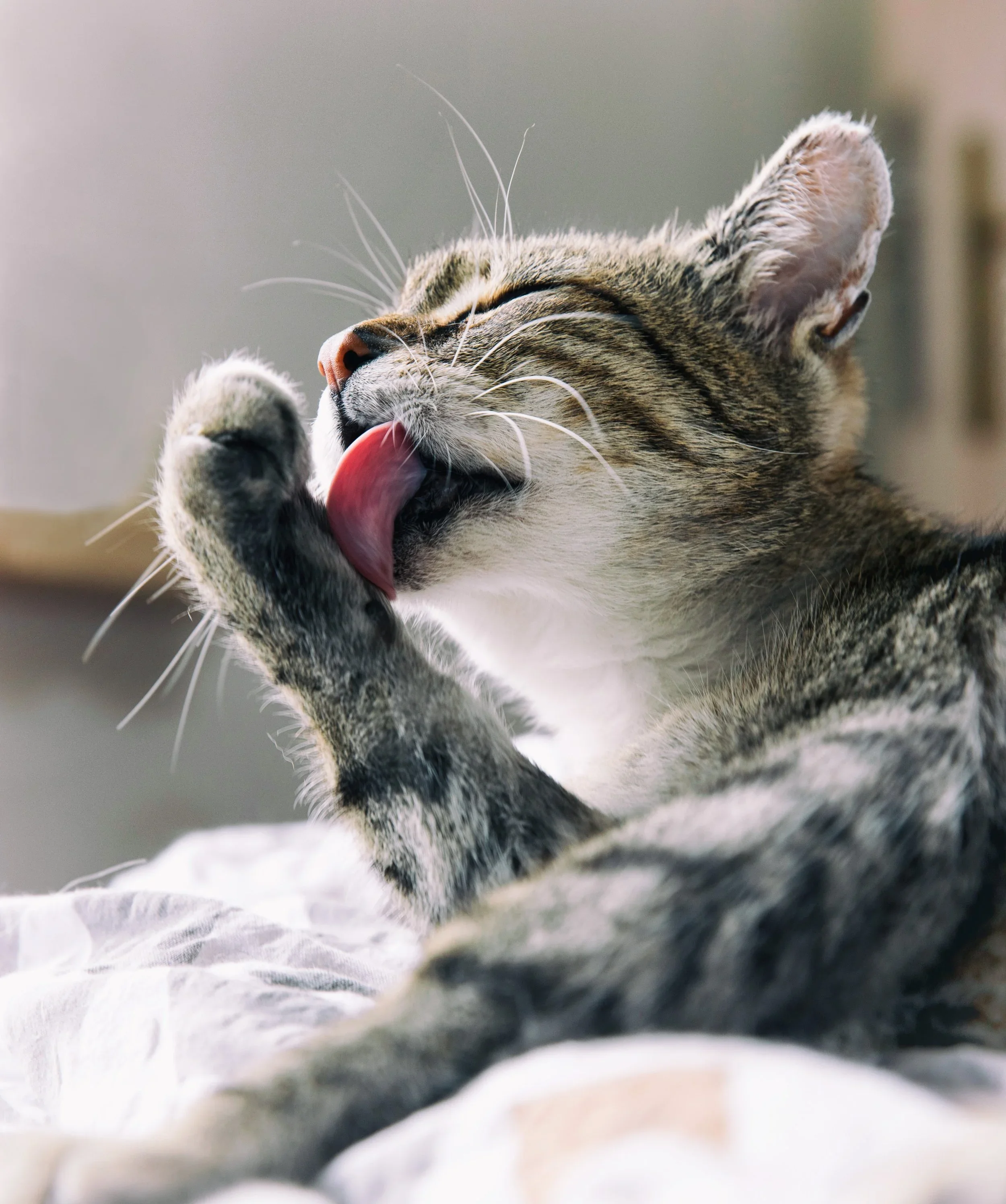
Cats are naturally meticulous groomers. Licking helps them stay clean, regulate body temperature, and even self-soothe. But when a cat is excessively licking, it may signal an underlying medical or behavioral issue that needs attention.
Understanding the difference between normal grooming and excessive licking is essential for protecting your cat’s health.
What Counts as Excessive Licking?
While grooming is normal, excessive licking may look like:
Bald patches or thinning fur
Red, irritated, or inflamed skin
Open sores or scabs
Frequent licking of one specific area
Increased grooming that disrupts eating, sleeping, or play
If you notice these signs, it’s time to investigate further.
Common Medical Causes for Why a Cat is Excessively Licking
Excessive licking is often linked to physical discomfort. Some of the most common medical reasons include:
Allergies
Cats can develop allergies to food, environmental triggers (like pollen or dust), or fleas. Even strictly indoor cats can experience allergic reactions that cause itchy skin and overgrooming.
Fleas and Parasites
A single flea bite can cause intense irritation, especially in cats with flea allergy dermatitis. Parasites such as mites may also contribute to persistent itching.
Skin Infections
Bacterial or fungal infections can make the skin painful or itchy, prompting repeated licking.
Pain or Arthritis
Cats sometimes lick areas that are painful, including joints affected by arthritis. What looks like a skin issue may actually be joint discomfort.
Stress and Anxiety
Behavioral overgrooming can develop in response to stress, changes in the home, or environmental triggers. Cats may lick to self-soothe, much like nail-biting in humans.
Why Prompt Evaluation Matters
When a cat is excessively licking, the skin can quickly become damaged. Open wounds increase the risk of infection and may lead to chronic skin conditions if left untreated. Additionally, if the cause is pain or an underlying illness, early diagnosis significantly improves outcomes.
A veterinary examination may include:
A thorough skin and coat evaluation
Flea and parasite assessment
Allergy testing or dietary trials
Bloodwork to rule out systemic conditions
Discussion of recent lifestyle changes
Accurate diagnosis ensures that treatment targets the root cause—not just the symptom.
Treatment Options When Your Cat is Excessively Licking
Treatment depends on the underlying issue and may include:
Prescription medications to relieve itching or inflammation
Flea prevention
Special diets for food sensitivities
Antibiotics or antifungal therapy
Pain management for arthritis
Environmental enrichment and stress reduction strategies
With the right approach, most cats experience significant improvement.
Compassionate Feline Care in Cherry Hill
At The Cat Clinic at Cherry Hill, we understand how concerning it can be when your cat is excessively licking. Because we specialize exclusively in feline medicine, we are experienced in diagnosing and treating the unique skin, allergy, and behavioral conditions that affect cats.If you’ve noticed bald spots, skin irritation, or persistent grooming, don’t wait. Our team provides thorough evaluations and customized treatment plans designed specifically for cats. Contact The Cat Clinic at Cherry Hill today to schedule an appointment and help your feline companion feel comfortable and healthy again.